Medically Reviewed By
MBBS, DCP, DNB Pathology
Pathology · Last reviewed: June 2026
Under our Editorial Policy & Medical Review Policy
Intrinsic Factor Antibody- Elisa Hyderabad | Focus Diagnostics
Book This Test
Fill in your details and connect with our team instantly on WhatsApp.
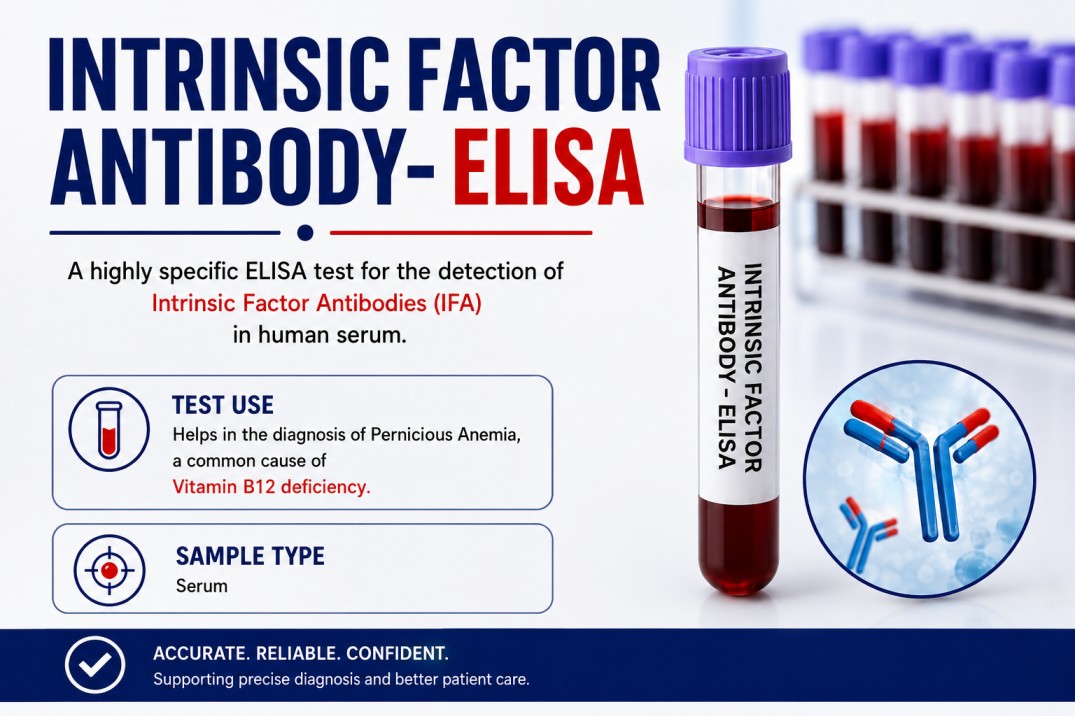
INTRINSIC FACTOR ANTIBODY- ELISA
Get reliable diagnostics, expert support, and a seamless booking experience with Focus Diagnostics.
About this test
The Intrinsic Factor Antibody Test (ELISA) is a laboratory blood test used to detect autoantibodies against intrinsic factor, a protein produced by the parietal cells of the stomach. Intrinsic factor is essential for the absorption of Vitamin B12 (Cobalamin) in the small intestine. The presence of intrinsic factor antibodies strongly suggests pernicious anemia, an autoimmune disorder that leads to vitamin B12 deficiency.
Vitamin B12 plays a vital role in the production of healthy red blood cells, proper nerve function, and DNA synthesis. When intrinsic factor is blocked or destroyed by antibodies, vitamin B12 cannot be absorbed efficiently, resulting in a gradual deficiency. Untreated vitamin B12 deficiency can lead to megaloblastic anemia, neurological complications, memory problems, numbness, tingling of the hands and feet, difficulty walking, fatigue, and weakness.
Pernicious anemia is one of the most common causes of severe vitamin B12 deficiency in adults and is often associated with autoimmune gastritis. Individuals with other autoimmune diseases such as thyroid disorders, type 1 diabetes, vitiligo, or autoimmune thyroiditis may have an increased risk of developing pernicious anemia.
The ELISA (Enzyme-Linked Immunosorbent Assay) method provides a highly sensitive and specific laboratory technique for detecting intrinsic factor antibodies. A positive intrinsic factor antibody test is highly specific for pernicious anemia, although not every patient with pernicious anemia will have detectable antibodies. Therefore, doctors often interpret the results together with Vitamin B12 levels, Complete Blood Count (CBC), methylmalonic acid (MMA), homocysteine levels, and gastric parietal cell antibody testing when appropriate.
Doctors recommend this test for patients with unexplained macrocytic anemia, low vitamin B12 levels, neurological symptoms, chronic fatigue, or suspected autoimmune gastritis. Early diagnosis is important because timely vitamin B12 replacement therapy can prevent permanent neurological damage and improve overall health.
Benefits of the Test
- Helps diagnose pernicious anemia.
- Detects intrinsic factor autoantibodies.
- Identifies autoimmune causes of vitamin B12 deficiency.
- Supports evaluation of macrocytic anemia.
- Assists in investigating neurological symptoms due to B12 deficiency.
- Performed using sensitive ELISA technology.
- Requires only a simple blood sample.
- Supports early diagnosis and treatment.
Why Doctors Recommend This Test
Doctors recommend the Intrinsic Factor Antibody Test for patients with low vitamin B12 levels, unexplained anemia, macrocytosis, neurological symptoms, autoimmune gastritis, or suspected pernicious anemia. It is frequently used together with other laboratory tests to establish the underlying cause of vitamin B12 deficiency.
Preparation Before the Test
No special preparation is required.
You may eat and drink normally unless your healthcare provider gives specific instructions. Inform your doctor about vitamin B12 supplements, recent vitamin B12 injections, medications, previous autoimmune diseases, or any recent laboratory investigations. A blood sample is collected from a vein for analysis.
Normal Reporting Time
Typically: 2–5 Working Days
Reporting time may vary depending on laboratory methodology.
Who Should Take This Test?
This test is recommended for:
- Individuals with vitamin B12 deficiency.
- Patients with macrocytic or megaloblastic anemia.
- People with chronic fatigue and weakness.
- Individuals with numbness or tingling in the hands and feet.
- Patients with suspected pernicious anemia.
- Individuals with autoimmune gastritis.
- Patients with unexplained neurological symptoms.
- Individuals with other autoimmune diseases.
- Patients referred by hematologists or gastroenterologists.
- Anyone advised by their healthcare provider.
Test FAQs
What is the Intrinsic Factor Antibody Test?
What does a positive Intrinsic Factor Antibody Test mean?
Can this test diagnose vitamin B12 deficiency?
Do I need to fast before the test?
How is the sample collected?
What symptoms may suggest pernicious anemia?
Is a negative Intrinsic Factor Antibody Test enough to rule out pernicious anemia?
Is the Intrinsic Factor Antibody Test accurate?
What should I do if my test is positive?
What is the difference between Intrinsic Factor Antibody and Parietal Cell Antibody Tests?
INTRINSIC FACTOR ANTIBODY- ELISA
Rs. 2250
Explore Related Tests & Services
Find Your Nearest Focus Diagnostic Centre Hyderabad
Popular Lab Tests in Other Cities
Telangana
Andhra Pradesh
Book Your lab tests instantly
Accurate reports and home sample collection across Hyderabad