How to Detect Heart Disease Early: Signs, Tests & Prevention
By Focus Diagnostics
30 May 2026
3 min read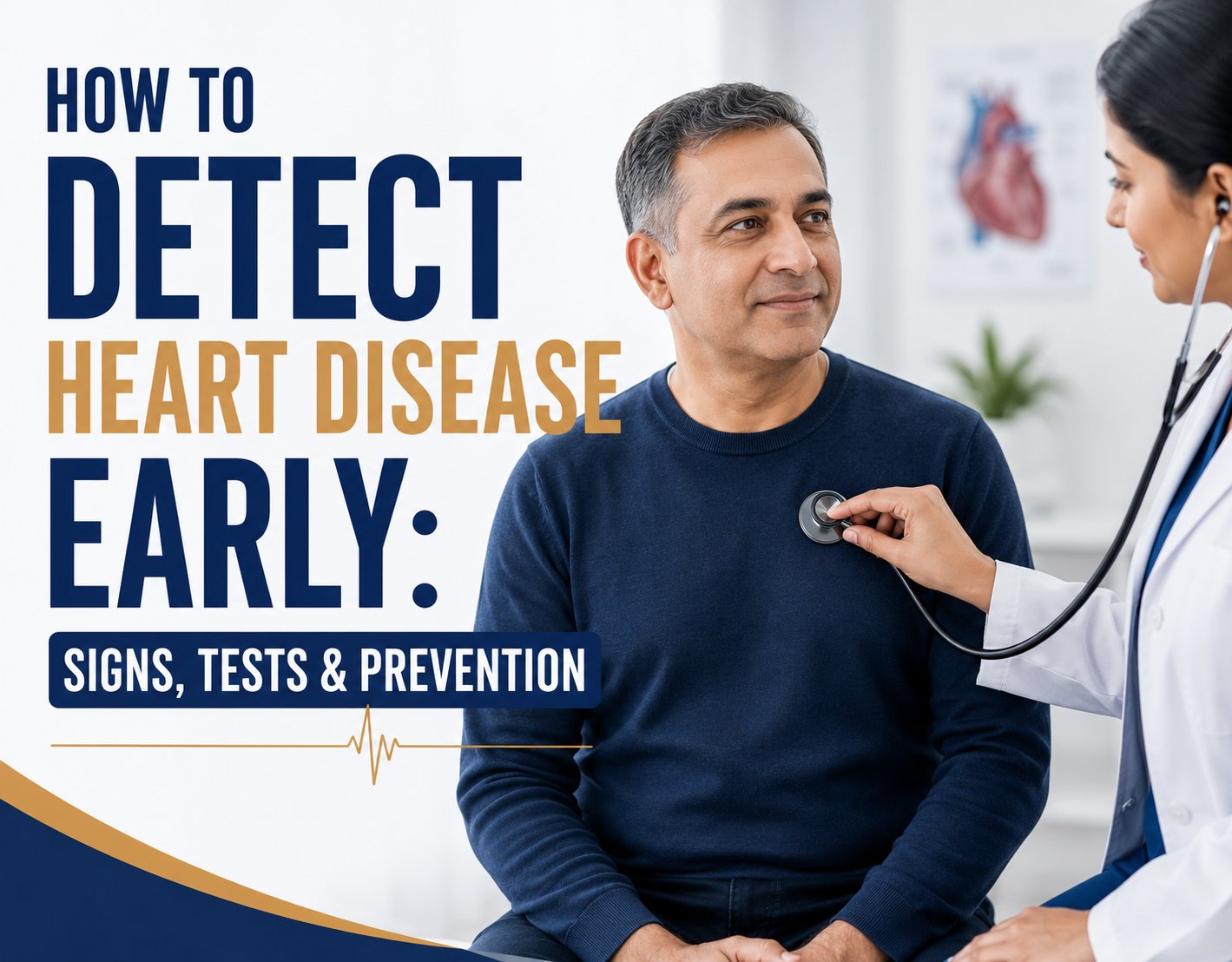
How to Detect Heart Disease Early: Don’t Wait for a Warning Sign
Heart disease is often called a “silent killer” for a reason.
Most people assume:
“I’ll know when something is wrong”
But the reality is:
Heart disease develops quietly over years—with little or no symptoms
By the time clear signs appear, the condition may already be serious.
That’s why early detection is critical
Why Early Detection Matters
Detecting heart disease early can:
- Prevent heart attacks
- Reduce complications
- Improve treatment success
- Save lives
Early diagnosis = better outcomes
Early Signs of Heart Disease You Should Not Ignore
Even though heart disease can be silent, your body may give subtle warnings:
- Chest discomfort or tightness
- Shortness of breath
- Unusual fatigue
- Irregular heartbeat
- Dizziness or lightheadedness
- Pain in arm, neck, or jaw
These symptoms are often mild—but important
Silent Risk Factors (Even Without Symptoms)
You may be at risk even if you feel completely healthy.
Key risk factors include:
- High cholesterol
- High blood pressure
- Diabetes
- Smoking
- Obesity
- Sedentary lifestyle
These are known as hidden triggers of heart disease
Essential Tests to Detect Heart Disease Early
Early detection depends on the right diagnostic tests:
1. Lipid Profile (Cholesterol Test)
- Measures LDL (bad) and HDL (good cholesterol)
- High LDL can lead to artery blockage
2. ECG (Electrocardiogram)
- Records heart activity
- Detects irregular heart rhythms
3. Blood Pressure Check
- Identifies hypertension
- Major cause of heart disease
4. Blood Sugar Test
- Detects diabetes
- Diabetes significantly increases heart risk
5. High-Sensitivity CRP (Advanced Test)
- Detects inflammation in arteries
- Helps predict heart risk early
6. TMT / Stress Test (If Needed)
- Evaluates heart performance under stress
- Detects hidden blockages
Who Should Get Heart Screening?
You should not delay testing if you:
- Are above 30–35 years
- Have a family history of heart disease
- Experience fatigue or chest discomfort
- Have lifestyle risk factors
Even healthy-looking individuals may be at risk
The Biggest Mistake People Make
Most people wait for:
Chest pain
Severe symptoms
But by then:
The condition may already be advanced
Prevention is always better than emergency treatment
How to Reduce Heart Disease Risk
Along with testing, lifestyle plays a huge role:
Healthy Diet
- Reduce fried and processed foods
- Increase fruits and fiber
Regular Exercise
- At least 30 minutes daily
Stress Management
- Meditation, yoga, relaxation
Avoid Smoking
Major risk factor for heart disease
Easy Heart Testing with Home Sample Collection
Focus Diagnostics offers:
- Home sample collection for heart tests
- Safe and hygienic process
- Accurate reports
Focus Diagnostics – Heart Screening in Hyderabad
Available at:
- Kompally
- KPHB
- Punjagutta
- Khajaguda
- Chintal
Advanced diagnostics for early heart detection
Key Takeaways
- Heart disease can develop silently
- Early signs are often mild and ignored
- Regular testing is the best prevention
- Lifestyle changes reduce long-term risk
Don’t wait for symptoms—act early
Frequently Asked Questions (FAQs)
1. Can heart disease be detected early?
Yes. With tests like ECG, cholesterol, and blood pressure monitoring, early detection is possible.
2. What is the first sign of heart disease?
Chest discomfort, fatigue, and shortness of breath are common early signs.
3. At what age should I start heart checkups?
After 30 years, especially if risk factors exist.
4. Are heart tests painful?
No. Most tests are simple, quick, and painless.
5. How often should I get tested?
- Normal: Once a year
- High risk: Every 6 months
Conclusion
Heart disease doesn’t start with a heart attack—it starts silently, long before symptoms appear. The good news is that with awareness and regular screening, it can be detected early and managed effectively.