How to Prevent Heart Disease: Simple Steps for a Healthy Heart
By Heart Disease
7 April 2026
How to Prevent Heart Disease: Protect Your Heart Before It’s Too Late
Heart disease doesn’t happen suddenly—it builds slowly over time due to unhealthy habits and ignored warning signs.
The scary part?
Many people don’t realize they are at risk until a serious event like a heart attack occurs
The good news is—heart disease is largely preventable.
Small lifestyle changes today can protect your heart for life.
What Causes Heart Disease?
Heart disease is usually caused by the buildup of plaque in arteries, which reduces blood flow to the heart.
Major causes include:
- High cholesterol
- High blood pressure
- Diabetes
- Smoking
- Obesity
- Lack of physical activity
These are known as modifiable risk factors
Early Warning Signs You Should Never Ignore
Even before serious problems, your body gives signals:
- Chest discomfort or tightness
- Shortness of breath
- Fatigue
- Irregular heartbeat
- Dizziness
Ignoring these signs can be dangerous
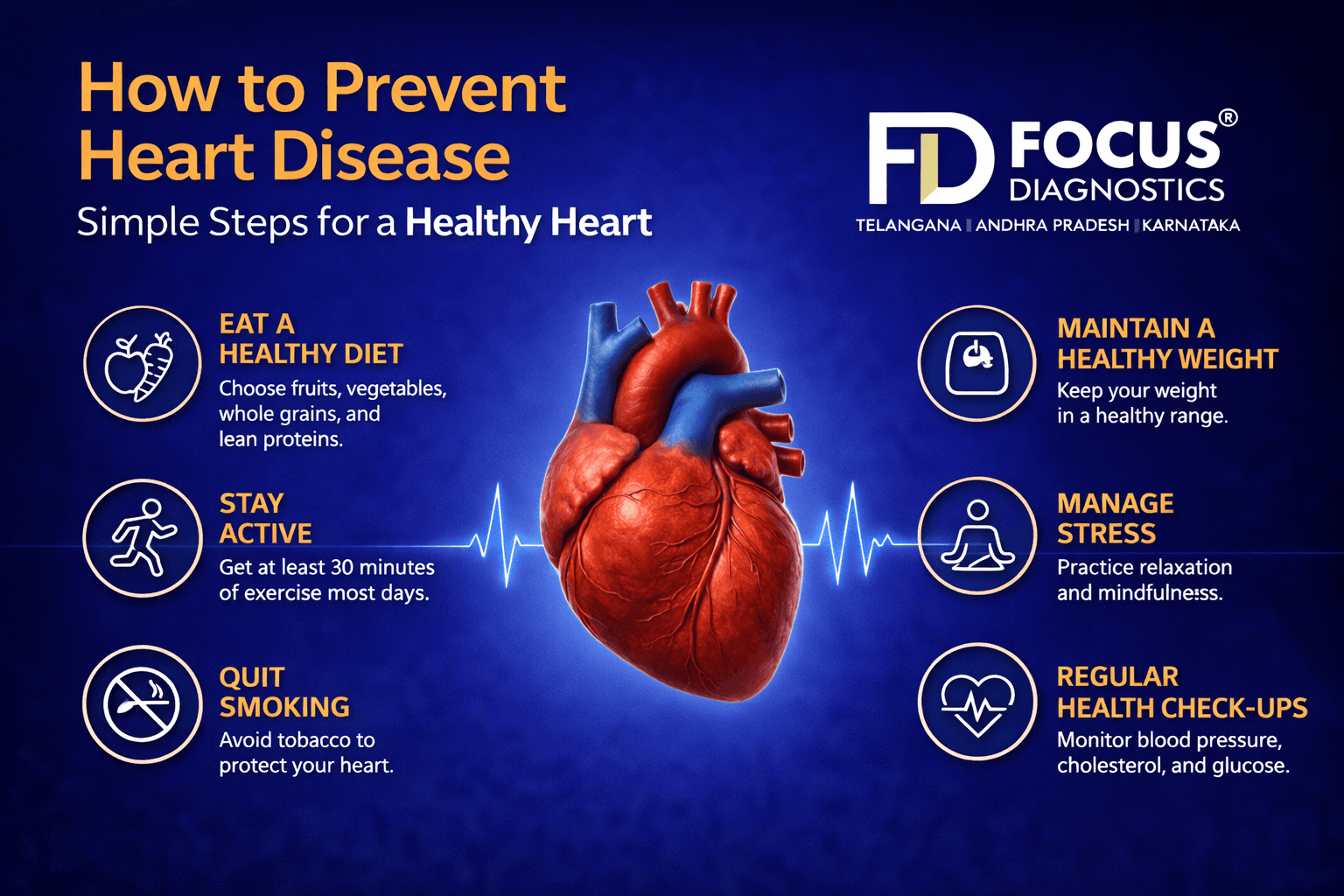
Proven Ways to Prevent Heart Disease
1. Eat a Heart-Healthy Diet
What you eat directly affects your heart.
Focus on:
- Fruits and vegetables
- Whole grains
- Healthy fats (nuts, olive oil)
- Lean proteins
Avoid:
- Fried and processed foods
- Excess salt and sugar
Diet is the foundation of heart health
2. Stay Physically Active
Regular exercise:
- Strengthens your heart
- Improves blood circulation
- Reduces cholesterol
Aim for 30 minutes of activity daily
3. Maintain a Healthy Weight
Excess weight increases:
- Blood pressure
- Cholesterol levels
Losing even 5–10% of body weight reduces risk significantly
4. Quit Smoking
Smoking damages blood vessels and increases heart risk dramatically.
Quitting is one of the best decisions for your heart
5. Limit Alcohol Consumption
Excess alcohol can:
- Raise blood pressure
- Increase cholesterol
Moderation is key
6. Manage Stress Effectively
Chronic stress leads to:
- High blood pressure
- Hormonal imbalance
Try:
- Meditation
- Yoga
- Relaxation techniques
Mental health impacts heart health
7. Get Quality Sleep
Poor sleep can increase heart disease risk.
Aim for 7–8 hours of sleep daily
Importance of Regular Heart Checkups
Even if you feel healthy, screening is essential.
Key tests include:
- Lipid Profile (Cholesterol Test)
- ECG (Electrocardiogram)
- Blood Sugar Test
- Blood Pressure Monitoring
Early detection prevents serious complications
Who is at Higher Risk?
You should be extra cautious if you:
- Have a family history of heart disease
- Are overweight
- Have diabetes or high BP
- Lead a sedentary lifestyle
High-risk individuals should get tested regularly
Easy Heart Testing with Home Sample Collection
Focus Diagnostics offers:
- Home sample collection for heart-related tests
- Safe and hygienic process
- Accurate and quick reports
Focus Diagnostics – Heart Screening in Hyderabad
Available at:
- Kompally
- KPHB
- Punjagutta
- Khajaguda
- Chintal
Advanced diagnostics for preventive heart care
Key Takeaways
- Heart disease is preventable with lifestyle changes
- Diet, exercise, and stress management are crucial
- Regular checkups help detect problems early
- Small habits can create big health benefits
Your heart health is in your hands
Conclusion
Preventing heart disease is not about drastic changes—it’s about making smart, consistent lifestyle choices every day. Your heart works tirelessly for you—now it’s your turn to take care of it.
Start today. Your future self will thank you.
Frequently Asked Questions (FAQs)
1. Can heart disease be completely prevented?
In many cases, yes—with a healthy lifestyle and regular screening.
2. What is the best way to prevent heart disease?
A combination of healthy diet, exercise, and avoiding smoking is most effective.
3. How often should I check my heart health?
- Normal: Once a year
- High risk: Every 6 months
4. Does stress affect heart health?
Yes. Chronic stress can increase blood pressure and heart risk.
5. Are heart tests painful?
No. Tests like ECG and blood tests are simple and painless.