Medically Reviewed By
Dr. Srinivas
Consultant Pathologist
Pathology · Last reviewed: June 2026
Book This Test
Fill in your details and connect with our team instantly on WhatsApp.
Allergen, Individual - Tree Pollen Mesquite
Get reliable diagnostics, expert support, and a seamless booking experience with Focus Diagnostics.
About this test
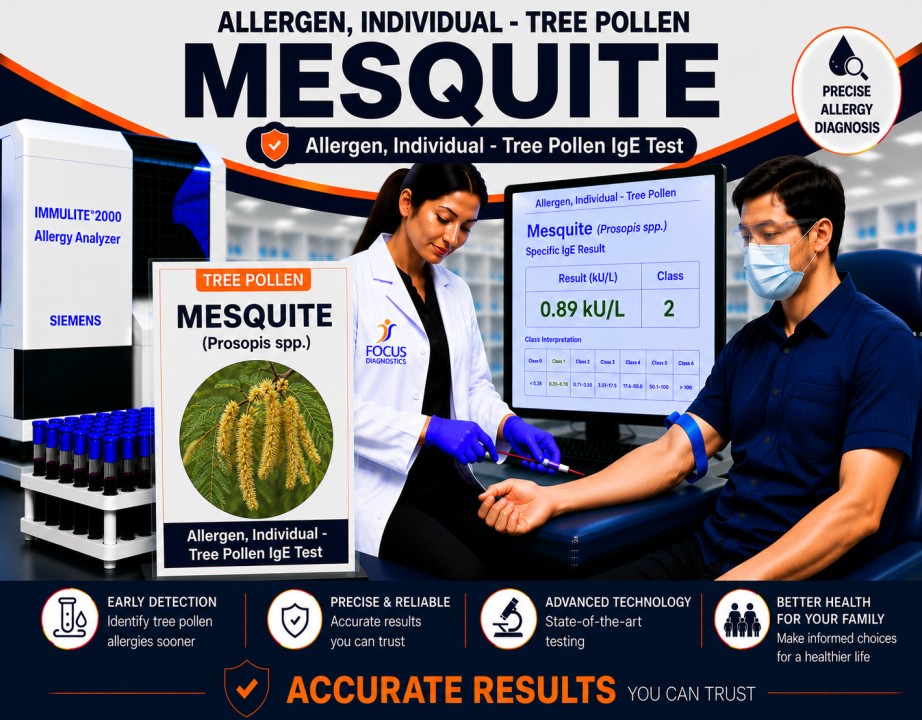
The Allergen, Individual – Tree Pollen Mesquite Test is a specialized allergy blood test used to measure specific Immunoglobulin E (IgE) antibodies against Mesquite tree pollen (Prosopis species). This test helps identify allergic sensitization to mesquite pollen and supports the diagnosis of seasonal allergic rhinitis, hay fever, allergic conjunctivitis, and pollen-induced asthma.
Mesquite trees, belonging to the genus Prosopis, are drought-resistant trees commonly found in arid and semi-arid regions, including parts of North America, South America, the Middle East, and India. During flowering seasons, mesquite trees release large amounts of airborne pollen. In susceptible individuals, inhalation of these pollen particles can trigger allergic reactions involving the eyes, nose, and respiratory tract.
An allergy to mesquite pollen develops when the immune system mistakenly identifies pollen proteins as harmful substances. In response, the body produces specific IgE antibodies. Upon repeated exposure, these antibodies stimulate the release of histamine and other inflammatory mediators, leading to allergy symptoms.
Mesquite pollen is a recognized cause of seasonal respiratory allergies and may contribute to asthma symptoms in sensitive individuals. The Mesquite Tree Pollen Allergy Test helps healthcare providers determine whether mesquite pollen exposure is responsible for allergy symptoms and assists in creating personalized allergy management plans.
Benefits of the Test
- Detects mesquite pollen-specific IgE antibodies
- Helps diagnose tree pollen allergy
- Supports evaluation of allergic rhinitis and hay fever
- Assists in identifying seasonal allergens
- Helps assess pollen-induced asthma
- Requires only a blood sample
Why Doctors Recommend This Test
Doctors may recommend a Mesquite Pollen Allergy Test for:
- Seasonal sneezing and nasal congestion
- Hay fever symptoms
- Itchy, watery eyes
- Wheezing or asthma symptoms during pollen seasons
- Persistent respiratory allergies
- Environmental allergy evaluation
- Suspected tree pollen allergy
The test helps determine whether sensitization to mesquite pollen may be contributing to symptoms.
Preparation Before Test
Sample Required:
- Peripheral venous blood sample
Preparation Guidelines:
- No fasting is required
- Antihistamines generally do not interfere with blood-based IgE testing
- Inform your physician about seasonal symptoms and allergy history
- Follow laboratory instructions before sample collection
Reporting Time
Results are generally available within 3 to 7 working days, depending on laboratory methodology and workflow.
Who Should Take This Test?
- Individuals with seasonal allergies
- Patients with allergic rhinitis or hay fever
- Individuals with asthma triggered by pollen exposure
- People with recurrent respiratory symptoms during flowering seasons
- Patients undergoing environmental allergy evaluation
Clinical Significance
Elevated Mesquite Pollen-Specific IgE Levels may indicate:
- Mesquite Tree Pollen Allergy
- Seasonal Allergic Rhinitis
- Hay Fever
- Allergic Conjunctivitis
- Pollen-Induced Asthma
- Respiratory Allergy
Possible symptoms include:
- Frequent sneezing
- Runny or blocked nose
- Nasal itching
- Itchy, watery eyes
- Postnasal drip
- Coughing
- Wheezing
- Shortness of breath
- Asthma flare-ups during pollen seasons
The presence of specific IgE antibodies suggests sensitization but should always be interpreted together with symptom history and environmental exposure.
Important Note
A positive mesquite pollen-specific IgE result indicates sensitization but does not necessarily confirm clinically significant allergy. Results should be interpreted together with clinical symptoms, pollen exposure patterns, and physician assessment.
Limiting exposure during peak pollen seasons and following appropriate allergy management measures may help reduce symptoms.
Test FAQs
What is the Mesquite Tree Pollen Allergy Test?
Why is this test performed?
What sample is required?
Is fasting required?
What symptoms can mesquite pollen allergy cause?
Can mesquite pollen cause hay fever?
Can mesquite pollen worsen asthma?
Can antihistamines affect the test?
Does a positive result confirm allergy?
Who interprets the results?
Find Your Nearest Focus Diagnostic Centre Hyderabad
Popular Lab Tests in Other Cities
Telangana
Andhra Pradesh
Popular Tests in Hyderabad
Book Your lab tests instantly
Accurate reports and home sample collection across Hyderabad
@2025 Focus Diagnostic & Healthcare Research Private Limited. All rights reserved