Growth and Nutrition Tests for Children: What Every Parent Should Know
By Focus Diagnostics
6 April 2026
3 min read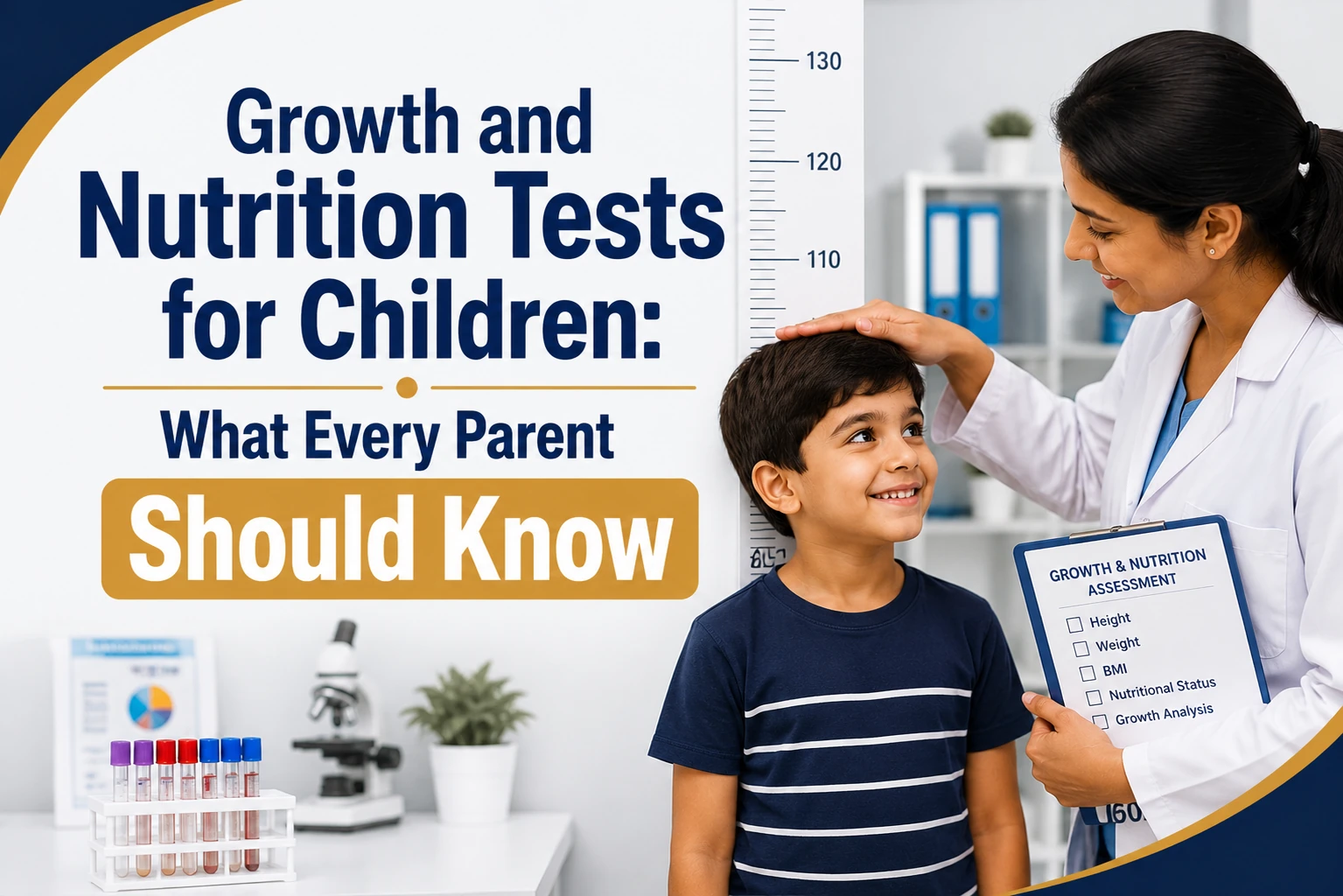
Growth and Nutrition Tests for Children: What Every Parent Should Know
Every parent wants their child to grow healthy, strong, and active. But in today’s fast-paced lifestyle, hidden nutritional deficiencies and growth issues are becoming increasingly common in children.
The challenge?
Many of these problems don’t show obvious symptoms early on.
That’s why growth and nutrition tests are essential—they help track your child’s development and detect issues before they affect long-term health.
Why Growth & Nutrition Monitoring is Important
Children’s bodies are constantly developing, and they need the right balance of nutrients to support:
- Physical growth (height & weight)
- Brain development
- Immunity
- Bone strength
Even small deficiencies can impact a child’s learning ability, energy levels, and overall development
Signs Your Child May Have Nutritional Deficiency
As a parent, watch out for these early warning signs:
- Slow growth (height or weight)
- Frequent illness
- Fatigue or low energy
- Poor appetite
- Difficulty concentrating
- Pale skin or hair fall
These may indicate underlying nutritional or metabolic issues
Key Growth and Nutrition Tests for Children
Let’s understand the most important tests that help assess your child’s health:
1. Complete Blood Count (CBC)
A basic but powerful test that checks:
- Hemoglobin levels
- Infection indicators
- Overall blood health
Helps detect anemia and hidden infections
2. Vitamin D Test
Essential for:
- Bone development
- Calcium absorption
Low levels can cause:
- Weak bones
- Delayed growth
One of the most common deficiencies in children
3. Vitamin B12 Test
Important for:
- Brain development
- Nervous system function
Deficiency may lead to:
- Poor concentration
- Fatigue
4. Iron Studies
Checks iron levels in the body.
Why it matters:
- Prevents anemia
- Supports oxygen supply to organs
Crucial for active and growing children
5. Blood Sugar Test
While less common in kids, it helps:
- Detect early metabolic issues
- Monitor energy balance
Important if there is family history of diabetes
6. Thyroid Function Test
Thyroid plays a key role in growth.
Abnormal levels may cause:
- Growth delays
- Weight imbalance
- Hormonal issues
Essential for evaluating overall development
7. Calcium & Mineral Tests
These tests check:
- Calcium
- Magnesium
- Other essential minerals
Important for bone strength and development
How Growth Tests Help Parents
Growth and nutrition tests provide:
- Clear insights into your child’s development
- Early detection of deficiencies
- Guidance for diet and lifestyle changes
- Prevention of long-term health issues
Data-driven parenting = better health decisions
Stress-Free Testing at Home
Children often feel scared in hospitals or labs.
Focus Diagnostics offers:
- Child-friendly home sample collection
- Safe and hygienic process
- Comfortable environment
Focus Diagnostics – Trusted Child Health Testing in Hyderabad
Available at:
- Kompally
- KPHB
- Punjagutta
- Khajaguda
- Chintal
Accurate diagnostics with care for your child
Key Takeaways
- Growth issues can be silent but serious
- Nutrition tests help detect deficiencies early
- Essential tests include CBC, Vitamin D, B12, Iron, and Thyroid
- Regular screening ensures healthy development
Healthy growth starts with the right testing
Conclusion
Your child’s growth is not just about height and weight—it’s about proper nutrition, immunity, and overall development. Growth and nutrition tests help ensure your child is on the right track.
Don’t wait for visible symptoms—early testing ensures a healthier future
Frequently Asked Questions (FAQs)
1. What are growth tests for children?
They are tests that evaluate nutrition levels, hormones, and overall development.
2. How often should children undergo nutrition testing?
Once a year for healthy children, or as advised by a doctor if symptoms exist.
3. Can poor nutrition affect brain development?
Yes. Deficiencies like Vitamin B12 and iron can impact brain function and learning.
4. Is home sample collection safe for kids?
Yes. It is safe, gentle, and less stressful for children.
5. Which test is most important for growth?
There is no single test—a combination of tests gives a complete picture.