Lipid Profile Explained in Simple Terms: What Your Cholesterol Report Means
By Focus Diagnostics
13 April 2026
3 min read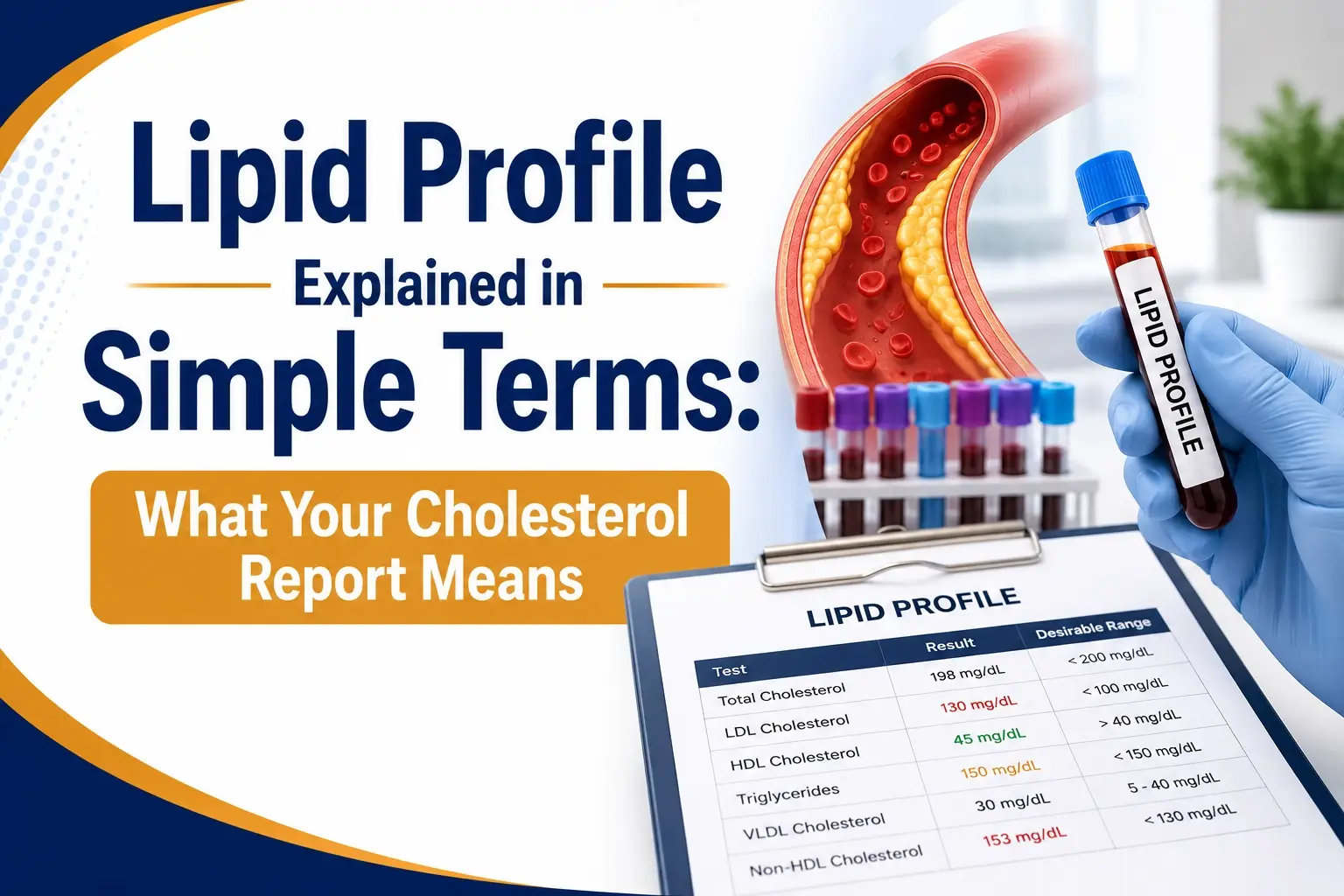
Lipid Profile Explained in Simple Terms: Understand Your Report Easily
You’ve done your blood test…
You receive your report…
And then you see terms like:
LDL
HDL
Triglycerides
Confusing, right?
Don’t worry — this guide will help you understand your lipid profile in the simplest way possible.
What is a Lipid Profile Test?
A lipid profile test is a blood test that measures different types of fats (lipids) in your blood.
It helps assess your risk of heart disease and stroke
What Does a Lipid Profile Include?
Let’s break it down one by one
1. LDL (Bad Cholesterol)
Think of LDL as:
“Cholesterol that clogs your arteries”
- High LDL = Higher risk of heart disease
- It builds up in blood vessels
Lower LDL is better
2. HDL (Good Cholesterol)
HDL is the good guy.
“Cholesterol that cleans your arteries”
- Removes excess cholesterol
- Protects your heart
Higher HDL is better
3. Total Cholesterol
This is the sum of all cholesterol in your blood.
But important note:
Total cholesterol alone is not enough
You must look at LDL & HDL separately
4. Triglycerides
These are fats stored in your body from excess calories.
High triglycerides can:
- Increase heart disease risk
- Be linked to obesity and diabetes
Normal Lipid Profile Ranges (Simple View)
Component - Ideal Level
LDL (Bad)- Less than 100 mg/dL
HDL (Good)- Above 40 mg/dL (men), 50 (women)
Total Cholesterol - Below 200 mg/dL
Triglycerides - Below 150 mg/dL
These values may vary slightly based on health condition
Why Lipid Profile is Important
You may feel completely healthy…
But your cholesterol may still be high.
That’s why it’s called a “silent risk factor”
A lipid profile helps:
- Detect heart disease risk early
- Monitor cholesterol levels
- Prevent future complications
What Happens if Cholesterol is High?
High cholesterol can lead to:
- Blocked arteries
- Heart attack
- Stroke
And often with no early symptoms
Simple Way to Remember
LDL = Bad (Keep LOW)
HDL = Good (Keep HIGH)
That’s the easiest way to understand your report.
How to Improve Your Lipid Profile Naturally
You don’t always need medication—lifestyle helps a lot:
Eat Healthy
- Reduce fried and oily food
- Increase fruits and fiber
Exercise Regularly
- At least 30 minutes daily
Maintain Weight
Reduces bad cholesterol
Avoid Smoking
Improves HDL levels
Limit Sugar & Alcohol
Helps control triglycerides
When Should You Get a Lipid Profile Test?
You should test if you:
- Are above 30 years
- Have a family history of heart disease
- Are overweight
- Have diabetes or BP
Even healthy individuals should test once a year
Easy Testing with Home Sample Collection
Focus Diagnostics offers:
- Home sample collection for lipid profile tests
- Safe and hygienic process
- Fast and accurate reports
Focus Diagnostics – Cholesterol Testing in Hyderabad
Available at:
- Kompally
- KPHB
- Punjagutta
- Khajaguda
- Chintal
Reliable heart risk screening you can trust
Key Takeaways
- Lipid profile measures cholesterol levels
- LDL is bad, HDL is good
- High cholesterol has no symptoms
- Regular testing helps prevent heart disease
Know your numbers, protect your heart
Conclusion
Understanding your lipid profile doesn’t have to be complicated. Once you know what each value means, you can take control of your heart health.
Frequently Asked Questions (FAQs)
1. Is fasting required for lipid profile?
Yes, usually 8–10 hours fasting is recommended.
2. What is the most important value in lipid profile?
LDL and HDL are the most important indicators.
3. Can cholesterol be controlled naturally?
Yes, with diet, exercise, and lifestyle changes.
4. How often should I check cholesterol?
Once a year, or more frequently if at risk.
5. Is lipid profile test painful?
No. It is a simple blood test.