What Does a Liver Function Test Show? Complete Guide to Your LFT Report
By Focus Diagnostics
21 April 2026
3 min read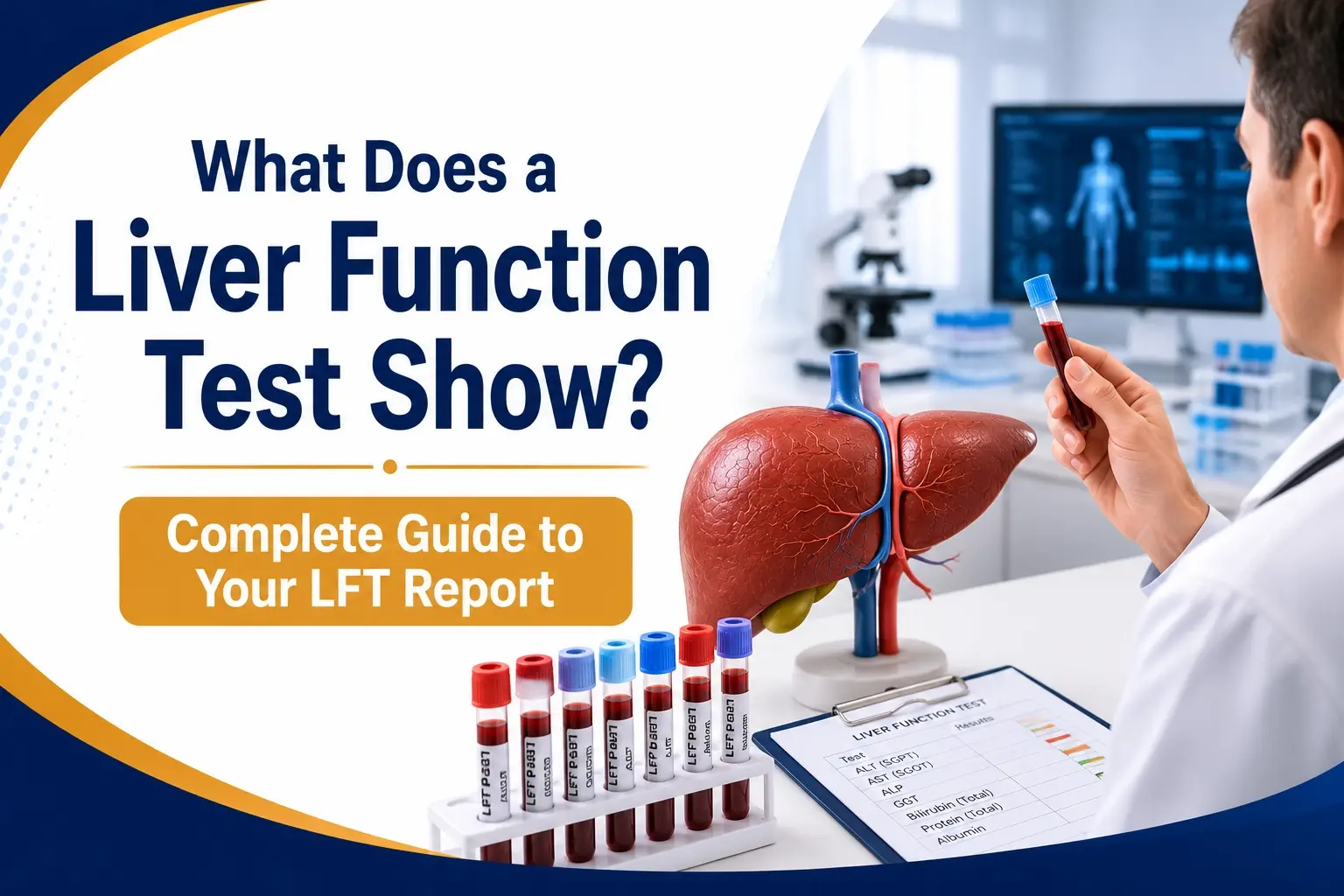
What Does a Liver Function Test Show? Understand Your Report Clearly
You’ve done a Liver Function Test (LFT)…
You get your report…
And then you see terms like:
SGPT
SGOT
Bilirubin
Confusing?
Don’t worry — this guide will help you understand what your liver test actually shows in simple language.
What is a Liver Function Test (LFT)?
A Liver Function Test (LFT) is a group of blood tests that check how well your liver is working.
It helps detect:
- Liver damage
- Infections
- Fatty liver
- Inflammation
What Does an LFT Measure?
Let’s break down the main components
1. SGPT (ALT)
Think of it as a liver damage marker
- High SGPT = Liver stress or damage
- Common in fatty liver, alcohol damage
Higher levels = concern
2. SGOT (AST)
Another enzyme linked to liver and muscle health
- Elevated levels may indicate:
- Liver injury
- Muscle issues
3. Bilirubin
This measures how your liver processes waste.
- High bilirubin can cause:
- Yellowing of skin (jaundice)
- Dark urine
Indicates liver dysfunction
4. Alkaline Phosphatase (ALP)
Linked to bile flow and liver function
- High levels may indicate:
- Blockage in bile ducts
- Liver disease
5. Total Protein & Albumin
These show how well your liver produces proteins.
- Low levels may indicate:
- Liver damage
- Nutritional issues
What a Liver Test Actually Tells You
A Liver Function Test helps identify:
- Liver inflammation
- Fatty liver disease
- Liver infection (hepatitis)
- Alcohol-related damage
- Blockages in bile flow
It gives a complete picture of liver health
Important Point Most People Miss
A single value is not enough.
Doctors look at:
- Combination of values
- Trends over time
That’s how accurate diagnosis is made
Symptoms That May Need an LFT
You should consider testing if you have:
- Fatigue or weakness
- Loss of appetite
- Abdominal pain
- Yellowing of eyes/skin
- Unexplained weight loss
These may indicate liver problems
Silent Liver Damage: Why Testing is Important
Many liver conditions:
Show no symptoms in early stages
By the time symptoms appear, damage may already be advanced
That’s why regular testing is important
Who Should Get LFT Done?
You should test if you:
- Consume alcohol regularly
- Have obesity or belly fat
- Have diabetes or high cholesterol
- Take long-term medications
These increase risk of fatty liver and liver damage
Can Liver Health Be Improved?
Yes — especially in early stages.
Healthy Diet
- Avoid oily and processed food
Reduce Alcohol
Biggest factor in liver damage
Exercise Regularly
Helps reduce fatty liver
Maintain Weight
Improves liver function
Easy LFT Testing at Home
Focus Diagnostics offers:
- Home sample collection for LFT tests
- Safe and hygienic process
- Accurate reports
Focus Diagnostics – Liver Testing in Hyderabad
Available at:
- Kompally
- KPHB
- Punjagutta
- Khajaguda
- Chintal
Trusted diagnostics for liver health
Key Takeaways
- LFT checks how well your liver is functioning
- SGPT, SGOT, and bilirubin are key markers
- High values may indicate liver damage
- Regular testing helps early detection
Understand your report, protect your liver
Conclusion
A Liver Function Test is more than just numbers—it’s a window into your liver’s health. Understanding your report can help you take early action and prevent serious complications.
Frequently Asked Questions (FAQs)
1. What is the most important value in LFT?
SGPT (ALT) is commonly used to detect liver damage.
2. Is LFT a fasting test?
Usually, fasting is not mandatory, but follow lab instructions.
3. Can fatty liver be detected in LFT?
Yes. Elevated enzymes may indicate fatty liver.
4. Are LFT tests painful?
No. It’s a simple blood test.
5. How often should I do LFT?
- Normal: Once a year
- High risk: Every 6 months