What Is a PET CT and Why Is It Done?
By Focus Diagnostics
8 October 2026
8 min read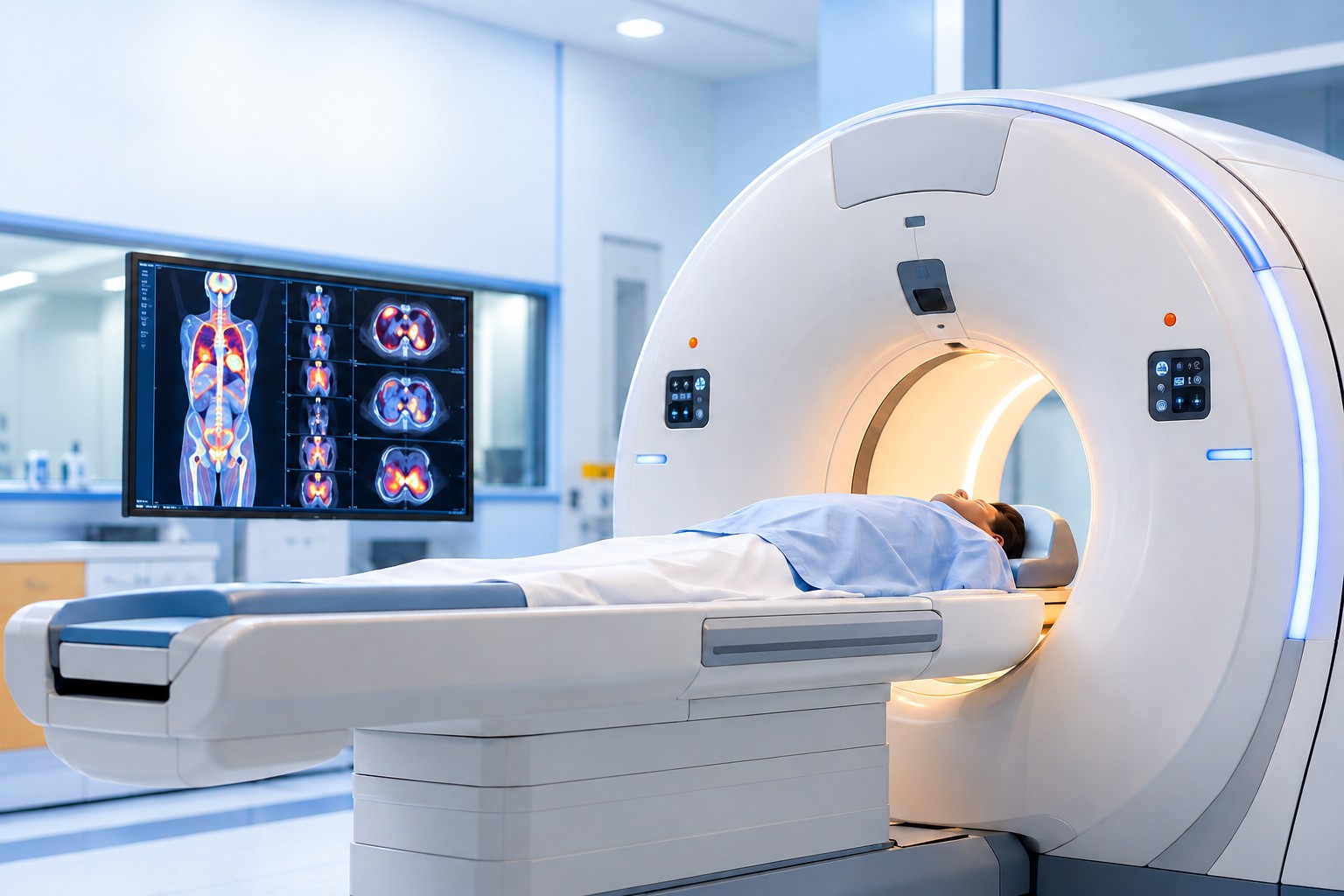
What Is a PET CT Scan and Why Is It Done?
A PET CT scan is an advanced diagnostic imaging test that combines Positron Emission Tomography (PET) with Computed Tomography (CT). It provides information about the metabolic activity of tissues along with detailed anatomical images, helping doctors evaluate certain diseases more comprehensively. PET CT is widely used in cancer care and may also be recommended for selected neurological and cardiac conditions.
At Focus Diagnostics, we offer advanced nuclear medicine and diagnostic imaging services in Hyderabad, supporting patients with appropriate imaging, preparation guidance, and detailed diagnostic reporting.
What Is a PET CT Scan?
PET CT is a specialized imaging examination that combines PET and CT technologies in a single scan.
The PET component provides information about the functional or metabolic activity of tissues using a radioactive tracer, while the CT component produces detailed images of the body's anatomical structures.
By combining both types of information, PET CT can help doctors identify areas of abnormal activity and understand their exact anatomical location.
How Does a PET CT Scan Work?
During a PET CT examination, a small amount of a radioactive tracer is administered, usually through an intravenous injection. The tracer travels through the body and is taken up by tissues according to their metabolic activity.
After the tracer has had enough time to distribute through the body, the patient undergoes the scan.
The PET scanner detects the tracer distribution, while the CT scanner creates detailed anatomical images. These images are combined to provide functional and structural information in a single examination.
Why Is a PET CT Scan Done?
PET CT is recommended when doctors need information about tissue activity in addition to anatomical details.
PET CT may be used for:
- Evaluating certain cancers
- Staging selected cancers
- Assessing possible spread of disease
- Monitoring response to treatment
- Evaluating suspected recurrence
- Supporting treatment planning
- Selected neurological investigations
- Selected cardiac investigations
The decision to perform a PET CT scan depends on the patient's medical history, symptoms, previous investigations, and the recommendation of the treating doctor.
PET CT Scan for Cancer
PET CT plays an important role in the evaluation of selected cancers. Some cancerous tissues may show increased metabolic activity, which can be detected through PET imaging.
The CT component helps identify the precise anatomical location of areas showing abnormal tracer uptake.
Depending on the type of cancer, PET CT may help doctors with:
- Initial cancer evaluation
- Disease staging
- Detecting possible spread
- Treatment planning
- Monitoring treatment response
- Evaluating suspected recurrence
PET CT findings are interpreted along with clinical history and other diagnostic investigations.
PET CT for Neurological Conditions
PET imaging can provide information about brain metabolism and other functional processes.
Selected PET examinations may be recommended as part of the evaluation of certain neurological conditions. The type of PET scan and tracer used depends on the clinical question and the recommendation of the treating specialist.
PET imaging is therefore not limited to cancer evaluation and may have important applications in selected neurological investigations.
PET CT for Cardiac Conditions
Certain PET examinations can also provide functional information about the heart and may be used in selected cardiac conditions.
Depending on the clinical requirement, cardiac PET imaging may help doctors evaluate specific aspects of heart function and tissue viability.
The appropriate examination is selected based on the patient's condition and the diagnostic information required.
PET CT Scan Procedure
A PET CT scan generally involves several steps:
Patient Preparation
The patient receives specific preparation instructions depending on the type of PET CT examination and tracer being used.
Tracer Administration
A prescribed radioactive tracer is administered, usually through an intravenous injection.
Uptake Period
The patient rests for a specified period while the tracer distributes through the body.
PET CT Imaging
The patient is positioned on the scanner, and PET and CT images are acquired according to the required protocol.
Reporting
The acquired images are reviewed by the appropriate specialist, and the findings are documented in the diagnostic report.
How to Prepare for a PET CT Scan?
Preparation requirements depend on the type of PET CT examination.
For many FDG PET CT scans, patients may be instructed to fast for a specified period before the examination. Blood glucose levels may also be checked when required.
Patients may also be advised to avoid strenuous physical activity before the scan.
Before your examination, inform the medical team if you:
- Have diabetes
- Take regular medications
- Are pregnant or may be pregnant
- Are breastfeeding
- Have any relevant medical condition
Following the preparation instructions carefully helps ensure appropriate imaging conditions.
How Long Does a PET CT Scan Take?
The total time required for a PET CT scan varies depending on the type of examination, tracer used, preparation requirements, uptake period, and imaging protocol.
The complete appointment may include preparation, tracer administration, a waiting or uptake period, image acquisition, and post-scan instructions.
Your diagnostic centre will provide specific information about the expected appointment duration.
Is PET CT Scan Safe?
PET CT involves radiation exposure from the radioactive tracer and CT imaging. The examination is performed when the expected diagnostic benefit is considered appropriate.
The type and amount of radioactive tracer depend on the specific examination.
If you are pregnant, may be pregnant, or are breastfeeding, inform the medical team before undergoing the scan.
Is PET CT Scan Painful?
PET CT imaging itself is generally not painful.
Patients may experience brief discomfort during the intravenous injection used to administer the tracer. During the scan, the patient generally needs to remain still while images are acquired.
Who May Need a PET CT Scan?
A PET CT scan may be recommended when additional functional information is required along with anatomical imaging.
It may be considered for:
- Patients undergoing evaluation for selected cancers
- Cancer staging
- Treatment response assessment
- Suspected recurrence
- Selected neurological conditions
- Selected cardiac conditions
The treating doctor determines whether PET CT is appropriate based on the patient's individual medical situation.
What Happens After a PET CT Scan?
After the examination, patients receive instructions based on the tracer and type of scan performed.
Patients may be advised to maintain adequate hydration and follow any additional instructions provided by the nuclear medicine team.
The acquired images are reviewed by the appropriate specialist, and a diagnostic report is prepared. The treating doctor can interpret the findings along with the patient's medical history and other investigations.
Why Choose Focus Diagnostics for PET CT in Hyderabad?
Focus Diagnostics provides advanced diagnostic imaging and nuclear medicine services for patients across Hyderabad and Telangana.
Our advantages include:
- Advanced diagnostic imaging facilities
- Nuclear medicine services
- Professional imaging protocols
- Detailed diagnostic reporting
- Patient-friendly appointment assistance
- Convenient locations
- Multiple diagnostic services under one roof
We focus on appropriate imaging, accurate reporting, and a patient-friendly diagnostic experience.
When Should You Consider a PET CT Scan?
You should discuss PET CT with your doctor when additional metabolic or functional imaging information may be required.
A PET CT scan may be recommended:
- When evaluating certain cancers
- For cancer staging
- To assess treatment response
- When recurrence is suspected
- For selected neurological conditions
- For selected cardiac conditions
Your doctor will determine whether PET CT is appropriate for your specific clinical requirement.
Book PET CT Scan at Focus Diagnostics
If you are looking for PET CT in Hyderabad, Focus Diagnostics offers advanced nuclear medicine and diagnostic imaging services.
We provide:
📍 Advanced diagnostic imaging services
🔬 Nuclear medicine imaging
🧾 Detailed diagnostic reports
📞 Easy appointment booking – 91213 77123
If your doctor has recommended a PET CT scan, contact Focus Diagnostics for appointment availability, preparation instructions, and examination-related information.
Conclusion
PET CT combines functional PET imaging with detailed CT imaging to provide a comprehensive view of metabolic activity and anatomical structures. It is commonly used in selected cancer evaluations and may also be recommended for certain neurological and cardiac conditions.
Understanding what a PET CT scan is, why it is done, how it works, and how to prepare can help patients approach the examination with greater confidence.
If your doctor has recommended a PET CT scan, choose an appropriate diagnostic centre with advanced nuclear medicine and imaging facilities.
For PET CT appointments in Hyderabad, contact Focus Diagnostics at 91213 77123.
FAQ SECTION:
What is a PET CT scan?
PET CT is an advanced imaging examination that combines Positron Emission Tomography (PET) and Computed Tomography (CT) to provide information about metabolic activity and anatomical structures.
Why is a PET CT scan done?
PET CT may be recommended for selected cancer evaluations, staging, treatment response assessment, suspected recurrence, and certain neurological and cardiac conditions.
Is PET CT used for cancer?
Yes. PET CT is commonly used in selected cancer-related situations, including evaluation, staging, treatment planning, treatment response assessment, and follow-up.
Can PET CT be used for neurological conditions?
Selected PET examinations may be used for certain neurological conditions. The appropriate PET scan depends on the clinical requirement and doctor's recommendation.
Can PET CT be used for heart conditions?
Yes. Selected cardiac PET examinations may provide functional information in specific cardiac conditions.
Is fasting required before a PET CT scan?
Fasting may be required for many FDG PET CT examinations. Preparation requirements depend on the tracer and type of examination.
Is PET CT scan painful?
The scan itself is generally not painful. There may be brief discomfort during the intravenous injection used to administer the tracer.
How long does a PET CT scan take?
The total appointment time varies depending on the scan type, tracer, preparation, uptake period, and imaging protocol.
Where can I book a PET CT scan in Hyderabad?
PET CT and nuclear medicine services are available through Focus Diagnostics. For appointments and availability, call 91213 77123.