Medically Reviewed By
MBBS, DCP, DNB Pathology
Pathology · Last reviewed: June 2026
Under our Editorial Policy & Medical Review Policy
Immunohistochemistry, Synaptophysin Hyderabad | Focus Diagnostics
Book This Test
Fill in your details and connect with our team instantly on WhatsApp.
IMMUNOHISTOCHEMISTRY, SYNAPTOPHYSIN
Get reliable diagnostics, expert support, and a seamless booking experience with Focus Diagnostics.
About this test
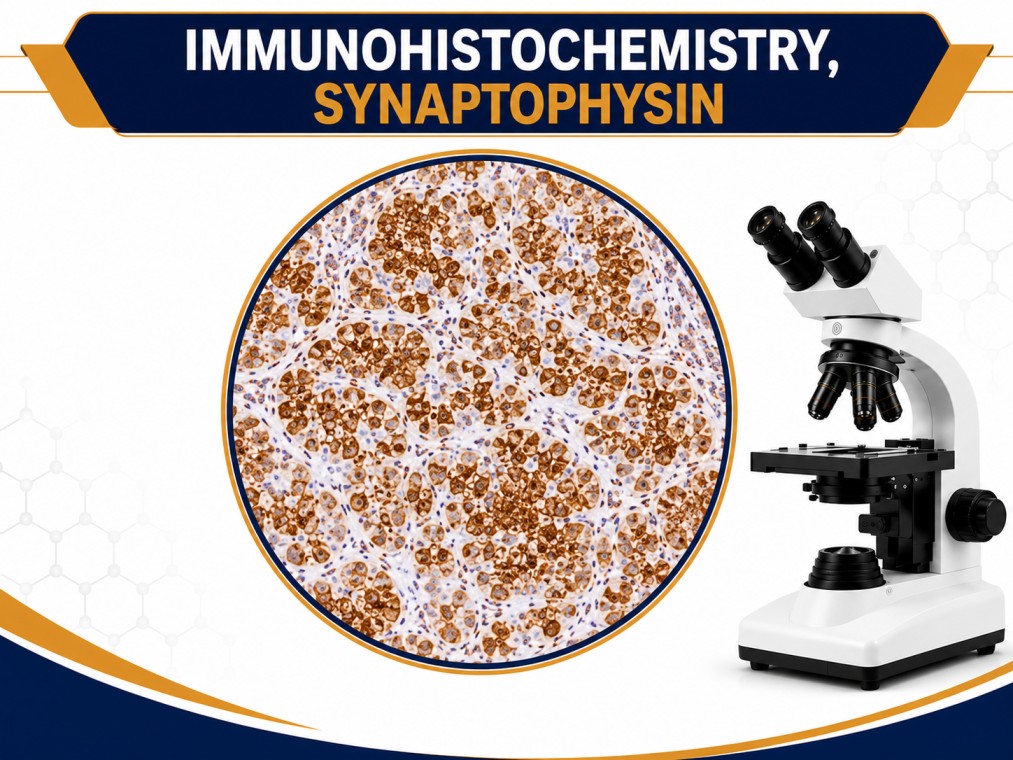
The IHC – Synaptophysin test is an immunohistochemistry-based diagnostic assay used to detect Synaptophysin protein expression in tissue samples. Synaptophysin is a membrane glycoprotein found in presynaptic vesicles of neurons and neuroendocrine cells, making it one of the most important markers for identifying neuroendocrine differentiation in tumors.
This test is widely used in pathology and oncology to diagnose and classify neuroendocrine tumors (NETs). Synaptophysin staining helps pathologists determine whether tumor cells originate from neuroendocrine tissue and assists in distinguishing neuroendocrine tumors from other types of cancer.
The IHC Synaptophysin test is commonly used in combination with other neuroendocrine markers such as Chromogranin A, CD56, NSE, and INSM1 to improve diagnostic accuracy. It is considered one of the most sensitive markers for neuroendocrine differentiation and is frequently included in tumor immunohistochemistry panels.
Benefits of the Test
- Helps diagnose neuroendocrine tumors
- Assists in identifying neuroendocrine differentiation
- Supports tumor classification and grading
- Improves diagnostic accuracy in oncology
- Helps guide treatment planning and prognosis evaluation
Why Doctors Recommend This Test
Doctors recommend the IHC Synaptophysin test when evaluating suspected neuroendocrine tumors and related cancers. It is commonly used in:
- Neuroendocrine tumor diagnosis
- Carcinoid tumor evaluation
- Small cell carcinoma assessment
- Pancreatic neuroendocrine tumor investigation
- Lung neuroendocrine tumor classification
- Tumor pathology and oncology studies
Synaptophysin is often evaluated alongside Chromogranin A, CD56, Ki-67, Cytokeratins, and NSE to provide a comprehensive neuroendocrine tumor profile.
Preparation Before Test
No special preparation is required for this test. Important considerations include:
- The test is performed on a biopsy or surgical tissue sample
- No fasting is required
- No medication restrictions are generally necessary
- Clinical history and imaging findings may assist interpretation
Normal Reporting Time
The typical turnaround time is 3 to 5 working days, depending on tissue processing and laboratory workflow.
Who Should Take This Test
- Patients with suspected neuroendocrine tumors
- Individuals undergoing cancer biopsy evaluation
- Patients with small cell carcinoma
- Cases requiring tumor origin determination
- Oncology patients requiring immunohistochemistry profiling
The IHC Synaptophysin test is an essential diagnostic tool in modern pathology. By detecting neuroendocrine differentiation, it helps clinicians accurately diagnose tumors, classify cancer subtypes, and develop effective treatment strategies.
Clinical Significance
Synaptophysin immunostaining is commonly used in the evaluation of:
- Neuroendocrine tumors (NETs)
- Carcinoid tumors
- Small cell lung carcinoma
- Pancreatic neuroendocrine tumors
- Neuroblastoma
- Pheochromocytoma
- Paraganglioma
- Neuroendocrine carcinomas
Strong Synaptophysin positivity is a key indicator of neuroendocrine differentiation and plays a vital role in tumor classification.
Test FAQs
What is the IHC Synaptophysin test?
What does Synaptophysin positivity indicate?
Is this a blood test?
Which cancers are associated with Synaptophysin expression?
Why is Synaptophysin important in pathology?
How long does the test take?
Is fasting required?
What sample is needed?
Is Synaptophysin used alone for diagnosis?
Who interprets the report?
IMMUNOHISTOCHEMISTRY, SYNAPTOPHYSIN
Rs. 1850
Explore Related Tests & Services
Find Your Nearest Focus Diagnostic Centre Hyderabad
Popular Lab Tests in Other Cities
Telangana
Andhra Pradesh
Popular Tests in Hyderabad
Biochemistry & Blood Tests
Ultrasound – Special Scans
Book Your lab tests instantly
Accurate reports and home sample collection across Hyderabad