Ultrasound Abdomen in Hyderabad: Uses, Preparation, Procedure and Conditions Detected
By Focus Diagnostics
24 November 2026
9 min read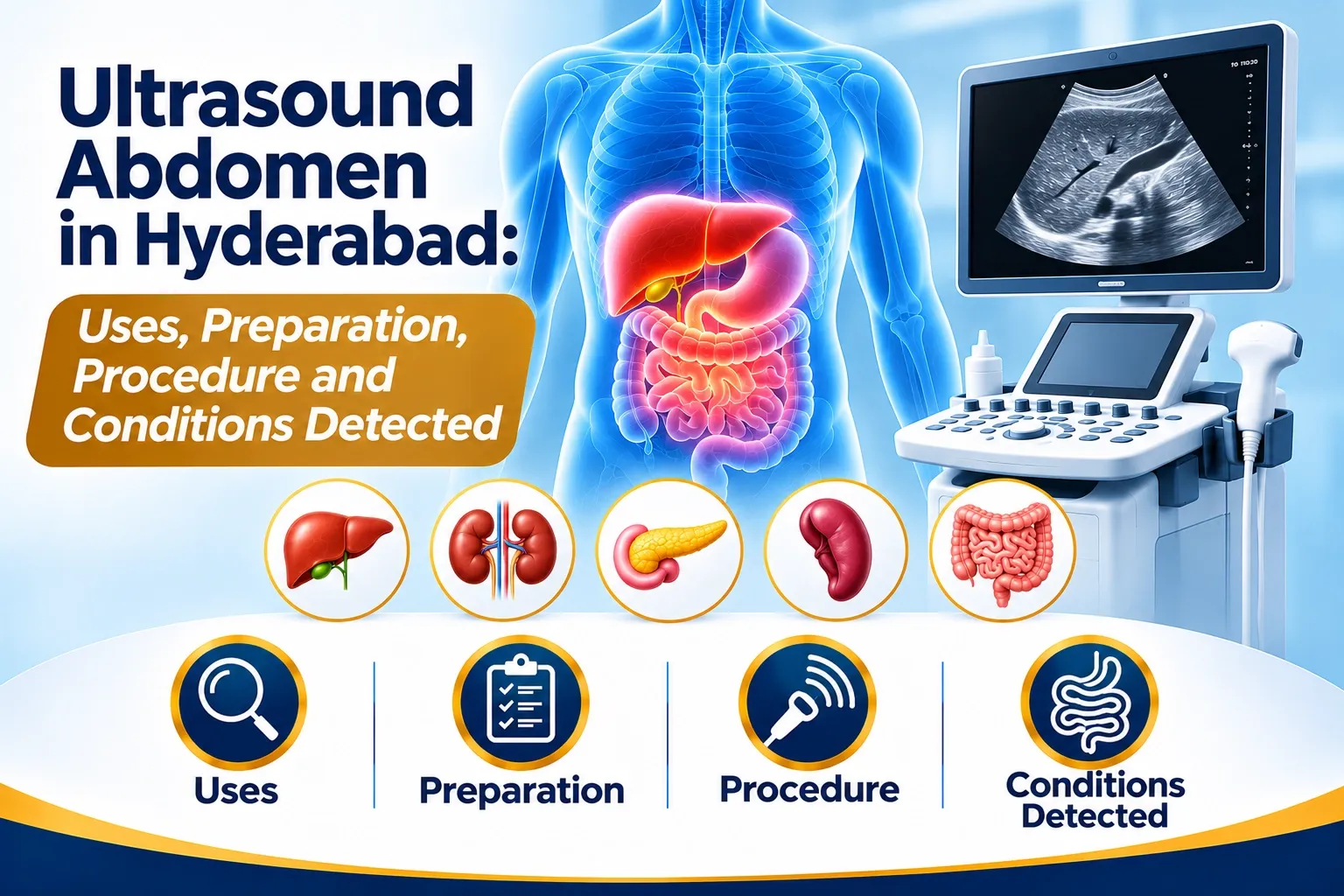
Ultrasound Abdomen in Hyderabad: Uses, Preparation, Procedure and Conditions Detected
By Focus Diagnostics | Hyderabad
An ultrasound abdomen scan is one of the commonly used diagnostic imaging tests for evaluating abdominal organs and identifying possible causes of pain, swelling, digestive discomfort and other symptoms. It uses high-frequency sound waves to produce real-time images of internal organs without using ionising radiation.
If you are searching for an ultrasound abdomen scan in Hyderabad, understanding the procedure, preparation and conditions it can help detect will help you feel more confident before your appointment.
At Focus Diagnostics, Hyderabad, patients can access diagnostic imaging services, including ultrasound and Doppler examinations at applicable centres. The Punjagutta centre serves patients from Punjagutta, Ameerpet, Somajiguda, Begumpet, Banjara Hills and surrounding areas.
What Is an Ultrasound Abdomen Scan?
An ultrasound abdomen scan, also called abdominal sonography, is a non-invasive imaging examination that uses sound waves to create pictures of organs inside the abdomen.
A trained ultrasound professional moves a handheld device called a transducer over the abdominal area. The device sends sound waves into the body and receives the echoes reflected by internal structures. A computer converts these signals into images that can be examined by a radiologist.
Unlike X-rays and CT scans, ultrasound does not use ionising radiation.
Depending on the doctor's prescription, the examination may evaluate one organ or several abdominal structures.
Which Organs Can Be Examined During an Abdominal Ultrasound?
An ultrasound abdomen examination can help assess several important organs.
1. Liver
The liver plays an essential role in metabolism, digestion and processing substances in the body.
Ultrasound can help evaluate:
- Fatty changes in the liver
- Liver enlargement
- Changes in liver texture
- Certain focal liver lesions
- Signs that may suggest chronic liver disease
Doctors may recommend liver ultrasound when liver function test results are abnormal or when symptoms require further evaluation.
2. Gallbladder
The gallbladder stores bile, which helps digest fats.
An ultrasound can help identify:
- Gallstones
- Gallbladder wall thickening
- Gallbladder inflammation
- Changes in gallbladder size
It is commonly recommended when patients experience pain in the upper-right abdomen or symptoms suggestive of gallbladder disease.
3. Kidneys
The kidneys filter waste products and maintain fluid and electrolyte balance.
Ultrasound can help assess:
- Kidney size and structure
- Kidney stones
- Kidney cysts
- Swelling caused by urine obstruction (hydronephrosis)
- Certain structural abnormalities
4. Pancreas
The pancreas helps regulate blood sugar and produces digestive enzymes.
An abdominal ultrasound may help evaluate pancreatic size, structure and certain abnormalities. However, bowel gas can sometimes limit visibility.
5. Spleen
The spleen supports immune function and filters blood.
Ultrasound can assess:
- Enlarged spleen
- Changes in spleen size
- Certain cysts or focal abnormalities
- Fluid around abdominal organs
6. Abdominal Aorta
The abdominal aorta is the major blood vessel supplying blood to the lower part of the body.
Ultrasound can help assess its size and identify possible enlargement, including an abdominal aortic aneurysm.
Why Do Doctors Recommend an Ultrasound Abdomen?
Doctors may recommend abdominal ultrasound when patients experience symptoms or have laboratory findings that require further investigation.
Common reasons include:
- Persistent abdominal pain
- Pain in the upper-right abdomen
- Abdominal swelling or distension
- Suspected gallstones
- Abnormal liver function test results
- Suspected kidney stones
- Unexplained enlargement of abdominal organs
- Suspected fluid accumulation in the abdomen
- Follow-up of previously identified abnormalities
An ultrasound may also be used to monitor certain known conditions or guide selected medical procedures.
The test recommended depends on the patient's symptoms, medical history and clinical examination.
What Conditions Can an Ultrasound Abdomen Help Detect?
An abdominal ultrasound can help doctors investigate several conditions, including:
ConditionWhat ultrasound may showFatty liverIncreased liver echogenicityGallstonesStones within the gallbladderKidney stonesVisible stones and possible urinary obstructionHydronephrosisDilatation of the kidney's collecting systemHepatomegalyEnlarged liverSplenomegalyEnlarged spleenLiver cystsFluid-filled lesionsAscitesFree fluid within the abdominal cavityAbdominal aortic aneurysmEnlargement of the abdominal aortaGallbladder inflammationFindings such as wall thickening and surrounding fluid
Important: Ultrasound findings alone do not always establish a final diagnosis. Your doctor may recommend blood tests, CT, MRI or additional investigations depending on the findings.
How Is an Ultrasound Abdomen Scan Performed?
An abdominal ultrasound is generally straightforward and does not require injections or surgery.
The examination usually follows these steps:
Step 1: Patient Preparation
The patient is asked to lie comfortably on the examination table. Depending on the examination, the abdomen may need to be exposed.
Step 2: Application of Ultrasound Gel
A water-based gel is applied to the abdominal skin. This helps the ultrasound probe maintain proper contact and transmit sound waves.
Step 3: Scanning With the Transducer
The sonographer moves the transducer over different areas of the abdomen to obtain images of the organs being examined.
Step 4: Image Assessment
The images are reviewed to evaluate organ size, structure and visible abnormalities.
The patient may be asked to turn sideways, change position or briefly hold their breath to improve image quality.
Step 5: Report Preparation
The acquired images are assessed by the radiologist, who prepares the imaging report for the referring doctor.
How to Prepare for an Ultrasound Abdomen?
Preparation depends on the type of ultrasound examination.
For many abdominal ultrasound examinations, fasting may be required to reduce bowel gas and improve visualisation of the gallbladder and other organs.
General preparation guidance includes:
- Follow the fasting instructions provided when booking your scan.
- Ask whether drinking water is permitted.
- Wear comfortable clothing.
- Carry previous ultrasound reports if available.
- Inform the imaging team about your medical history.
- Do not stop prescribed medicines unless your doctor advises you to do so.
For some kidney, urinary tract or pelvis examinations, you may be asked to drink water and maintain a full bladder.
Remember: Preparation instructions are not identical for every ultrasound. Confirm the specific instructions for your prescribed examination with the diagnostic centre.
How Long Does an Ultrasound Abdomen Take?
A routine abdominal ultrasound commonly takes approximately 15–30 minutes, although the duration may vary depending on the organs being examined and the complexity of the study.
Additional imaging or Doppler assessment may require more time.
Most patients can return to their regular activities immediately after the examination.
Is an Ultrasound Abdomen Safe?
Yes. Diagnostic ultrasound is generally considered a safe imaging method when performed for appropriate medical reasons.
Its important characteristics include:
- Uses sound waves instead of ionising radiation.
- Does not usually require injections or contrast agents.
- Is non-invasive.
- Can provide real-time images.
- Can be repeated when clinically indicated.
As with every diagnostic examination, the scan should be performed based on an appropriate clinical requirement.
Ultrasound Abdomen vs CT Abdomen: What Is the Difference?
Both examinations help doctors evaluate abdominal conditions, but they use different imaging technologies.
FeatureUltrasound AbdomenCT AbdomenTechnologySound wavesX-raysRadiationNo ionising radiationUses ionising radiationImagingReal-time imagesDetailed cross-sectional imagesCommon usesLiver, gallbladder, kidney and abdominal organ evaluationDetailed assessment of abdominal organs, injuries and other conditionsContrastUsually not requiredMay be required for selected studiesPreparationMay require fasting or a full bladderDepends on the CT protocol
Your doctor will decide which examination is appropriate based on the suspected condition and the information needed.
When Should You Consider an Ultrasound Abdomen in Hyderabad?
An ultrasound abdomen may be recommended if you have persistent abdominal discomfort, abnormal liver or kidney test results, suspected gallstones or other symptoms requiring imaging assessment.
Patients looking for an ultrasound scan in Hyderabad can consider Focus Diagnostics and check the availability of the required examination at their nearest centre.
Focus Diagnostics Punjagutta is located at Jaya Enclave, Sai Baba Temple Road, Dwarakapuri, Punjagutta, Hyderabad.
The centre serves patients from nearby localities, including:
- Punjagutta
- Ameerpet
- Somajiguda
- Begumpet
- Banjara Hills
- Khairatabad
- Jubilee Hills
- SR Nagar
Ultrasound and other diagnostic services are available across applicable Focus Diagnostics locations. Please confirm the required scan and appointment availability before visiting.
Why Choose Focus Diagnostics in Hyderabad?
Focus Diagnostics provides diagnostic imaging and laboratory services across multiple locations in Hyderabad.
Patients can benefit from:
- Advanced diagnostic imaging facilities
- Ultrasound and Doppler examinations at applicable centres
- Experienced radiology professionals
- Diagnostic laboratory services
- Quality-focused testing processes
- Multiple convenient centre locations
- Home sample collection for applicable laboratory tests
The focus is on providing reliable diagnostic support to help doctors make informed clinical decisions.
Conclusion
An ultrasound abdomen is a valuable diagnostic examination for evaluating the liver, gallbladder, kidneys, pancreas, spleen and other abdominal structures. It can help identify findings associated with gallstones, fatty liver, kidney stones, organ enlargement and other abdominal conditions.
If your doctor has recommended an ultrasound abdomen, follow the preparation instructions and choose a diagnostic centre that offers the required examination.
For ultrasound and diagnostic services in Hyderabad, contact Focus Diagnostics to check centre availability and appointment details.
Frequently Asked Questions (FAQs)
1. What is an ultrasound abdomen scan used for?
An ultrasound abdomen evaluates internal organs such as the liver, gallbladder, kidneys, pancreas and spleen. It helps investigate abdominal pain, gallstones, kidney stones and organ enlargement.
2. Is fasting required before an ultrasound abdomen?
Fasting may be required for several hours before certain abdominal ultrasound examinations. The exact duration depends on the scan protocol. Follow the instructions provided by the diagnostic centre.
3. Can an ultrasound abdomen detect fatty liver?
Yes. Ultrasound can identify imaging features suggestive of fatty liver. Additional clinical assessment and laboratory investigations may be needed.
4. Can an ultrasound abdomen detect kidney stones?
Ultrasound can identify many kidney stones and signs of urinary obstruction. However, some stones may not be clearly visible, and additional imaging may be recommended.
5. Is an ultrasound abdomen painful?
No. It is generally painless. You may feel slight pressure when the transducer is moved over the abdomen.
6. How long does an ultrasound abdomen take?
A routine examination commonly takes around 15–30 minutes. The duration can vary depending on the scan requirements.
7. Does an ultrasound abdomen use radiation?
No. Ultrasound uses high-frequency sound waves and does not use ionising radiation.
8. Can ultrasound detect gallstones?
Yes. Abdominal ultrasound is commonly used to identify gallstones and assess gallbladder abnormalities.
9. Do I need a doctor's prescription for an ultrasound abdomen?
Requirements may vary depending on the diagnostic centre and clinical circumstances. It is advisable to consult your doctor and carry the prescription or referral when available.
10. Where can I get an ultrasound abdomen in Hyderabad?
You can contact Focus Diagnostics to check ultrasound availability at its Hyderabad centres, including Punjagutta, and confirm appointment details.
Medical Disclaimer: This article is for educational purposes only. Ultrasound findings should be interpreted by a qualified radiologist in the context of clinical symptoms and medical history. Consult your treating doctor for diagnosis and treatment decisions.