Smoking Effects on Blood Tests: How Smoking Changes Your Health Reports
By Focus Diagnostics
30 May 2026
3 min read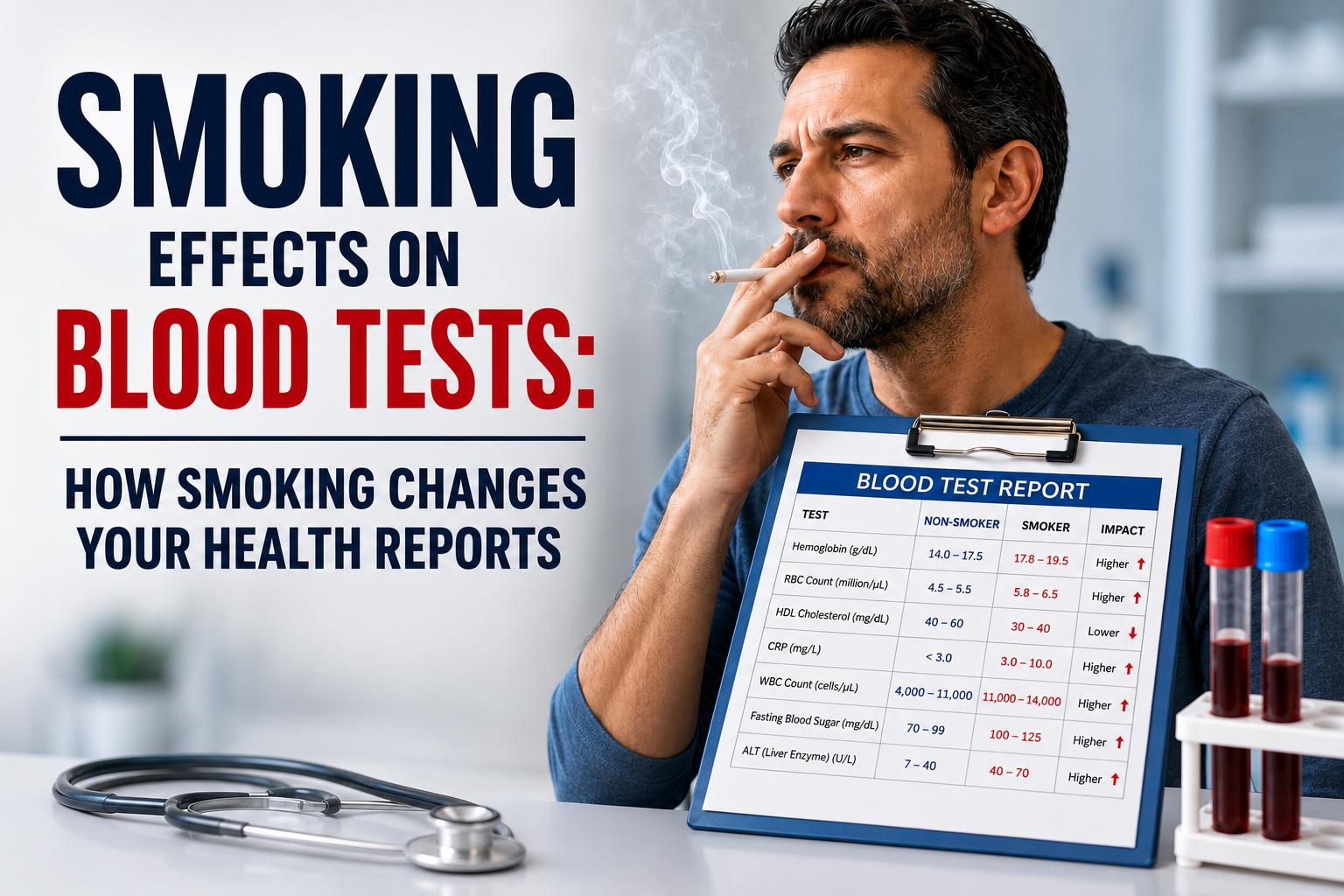
Smoking Effects on Blood Tests: What Your Reports May Be Telling You
Most smokers know smoking affects the lungs and heart.
But very few realize this:
Smoking can also change your blood test results
In fact, regular smoking can silently affect:
- Blood cells
- Cholesterol levels
- Oxygen supply
- Inflammation markers
And many people discover these changes only during routine health checkups.
How Smoking Affects the Body Internally
When you smoke, harmful chemicals enter your bloodstream almost immediately.
These chemicals can:
- Reduce oxygen delivery
- Damage blood vessels
- Increase inflammation
- Stress major organs
Over time, these effects begin appearing in diagnostic reports.
Blood Tests Commonly Affected by Smoking
1. CBC Test (Complete Blood Count)
Smoking often affects:
Hemoglobin Levels
The body may produce more hemoglobin because smoking reduces oxygen availability.
Result:
- Elevated hemoglobin levels in smokers
RBC Count (Red Blood Cells)
Smoking can increase RBC production.
This makes blood thicker and may increase heart risk.
White Blood Cell Count (WBC)
Smokers may show:
- Mildly elevated WBC count
Indicates ongoing inflammation in the body.
2. Lipid Profile (Cholesterol Test)
Smoking negatively affects cholesterol balance.
HDL (Good Cholesterol)
Smoking reduces HDL levels.
Lower HDL = Less heart protection
LDL & Triglycerides
Smoking may increase:
- Bad cholesterol
- Fat accumulation in blood vessels
Raises risk of:
- Heart disease
- Stroke
3. Blood Sugar Tests
Smoking may increase:
- Insulin resistance
- Blood sugar fluctuations
Smokers have a higher risk of developing diabetes.
4. Vitamin Levels
Long-term smoking may reduce:
- Vitamin C
- Vitamin D
- Antioxidant levels
Affecting immunity and overall health.
5. Oxygen Levels & Lung Function
Smoking affects oxygen transport in blood.
Some smokers may show:
- Reduced oxygen efficiency
- Lung-related abnormalities
Why Smokers Should Do Regular Health Checkups
Smoking-related damage develops slowly.
Many smokers:
Feel “normal” initially
Ignore internal damage
Blood tests help detect problems before symptoms appear.
Warning Signs Smokers Should Never Ignore
Consider testing if you experience:
- Frequent cough
- Breathlessness
- Chest discomfort
- Fatigue
- Dizziness
These may indicate smoking-related health changes.
Health Risks Smoking Can Trigger
Long-term smoking increases risk of:
- Heart disease
- Stroke
- High BP
- Lung disease
- Diabetes
Blood tests help monitor these risks early.
Can Blood Test Values Improve After Quitting Smoking?
YES.
After quitting:
- Oxygen levels improve
- Inflammation reduces
- Cholesterol balance improves over time
The body starts healing surprisingly fast.
Biggest Myth Smokers Believe
“If I feel okay, my body is okay.”
Reality:
Smoking damage often starts silently inside the body long before symptoms appear.
That’s why preventive testing matters.
Easy Health Testing with Home Sample Collection
Focus Diagnostics offers:
- Home sample collection for smokers’ health tests
- CBC, lipid profile, blood sugar, and more
- Safe and hygienic process
Focus Diagnostics – Preventive Testing in Hyderabad
Available at:
- Kompally
- KPHB
- Punjagutta
- Khajaguda
- Chintal
Accurate diagnostics for better lifestyle monitoring
Key Takeaways
- Smoking can affect multiple blood test values
- CBC, cholesterol, and sugar levels may change
- Internal damage can occur before symptoms appear
- Regular testing helps detect early health risks
Your blood report may reveal what smoking hides
Conclusion
Smoking doesn’t just affect the lungs—it impacts your entire body, including your blood and internal organs. The dangerous part is that many changes happen silently without obvious symptoms.
Regular blood tests can help detect early warning signs before serious complications develop
Because prevention always starts with awareness.
Frequently Asked Questions (FAQs)
1. Can smoking affect CBC test results?
Yes. Smoking may increase hemoglobin, RBC count, and WBC levels.
2. Does smoking increase cholesterol?
Yes. Smoking can lower good cholesterol (HDL) and increase heart risk.
3. Should smokers do regular health checkups?
Absolutely. Preventive testing helps detect silent damage early.
4. Can quitting smoking improve blood test results?
Yes. Many values improve gradually after quitting smoking.
5. Does smoking affect blood sugar levels?
Yes. Smoking may increase insulin resistance and diabetes risk.