TMT Test Explained: Why It’s Done & What It Detects
By Focus Diagnostics
29 May 2026
3 min read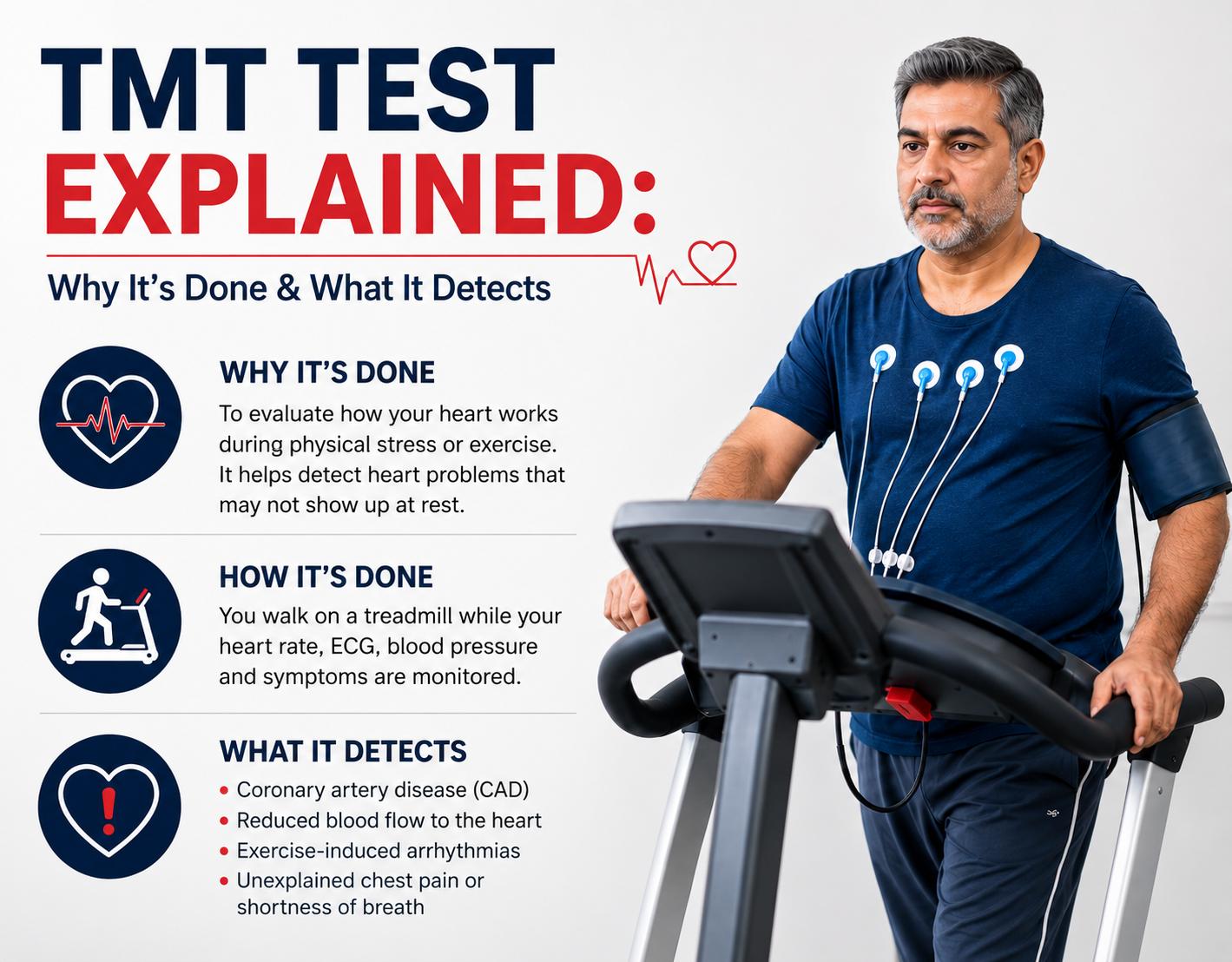
TMT Test Explained: A Simple Guide to the Cardiac Stress Test
Many heart problems do not appear when your body is resting.
That’s why doctors sometimes recommend a TMT test to see how your heart performs during physical activity.
If you’ve been advised to do a TMT, you may wonder:
“What is this test for?”
“Is it painful?”
“Why do I need to walk on a treadmill?”
Let’s understand everything in simple terms.
What is a TMT Test?
TMT stands for:
Treadmill Test
It is also called:
- Cardiac Stress Test
- Exercise Stress Test
The test checks:
How your heart responds during exercise or physical stress
Why is TMT Important?
Some heart problems become noticeable only when the heart works harder.
During exercise:
- Heart rate increases
- Blood circulation changes
- Oxygen demand rises
TMT helps detect hidden heart issues that may not appear in a normal ECG.
Why Doctors Recommend a TMT Test
A TMT is commonly advised if you have:
- Chest pain or discomfort
- Shortness of breath
- Irregular heartbeat
- Dizziness during activity
- Family history of heart disease
It helps evaluate your heart’s performance under stress.
What Happens During a TMT Test?
The procedure is simple and non-invasive.
Step 1: ECG Electrodes Are Attached
Small electrodes are placed on your chest to monitor heart activity.
Step 2: Walking on a Treadmill
You begin walking slowly.
Gradually:
- Speed increases
- Incline increases
This makes your heart work harder.
Step 3: Heart Monitoring
During the test, doctors monitor:
- Heart rate
- ECG changes
- Blood pressure
- Symptoms like chest pain or breathlessness
Step 4: Test Completion
The test usually lasts:
10–20 minutes
It may stop earlier if:
- Symptoms appear
- Heart changes are detected
- Target heart rate is reached
Is TMT Test Painful?
No.
The test is generally safe and painless.
You may simply feel:
- Tiredness
- Sweating
- Fast heartbeat due to walking
Similar to mild exercise.
What Does a TMT Test Detect?
TMT helps identify:
Reduced Blood Supply to Heart
Possible sign of blocked arteries.
Exercise-Induced Heart Problems
Heart rhythm or BP changes during stress.
Hidden Coronary Artery Disease
Detects risk not visible during rest.
Who Should Consider a TMT Test?
You may need TMT if you:
- Are above 35–40 years
- Have diabetes or high BP
- Have high cholesterol
- Experience chest discomfort during activity
Especially important for people with lifestyle risk factors.
Who Should Avoid TMT?
Doctors may avoid TMT if:
- Severe heart conditions exist
- Recent heart attack occurred
- Patient cannot walk properly
Alternative tests may be suggested.
How to Prepare for a TMT Test
Usually advised:
- Wear comfortable clothes and shoes
- Avoid heavy meals before test
- Inform doctor about medications
Follow instructions from your diagnostic center
TMT Testing at Focus Diagnostics
At Focus Diagnostics, we provide:
- Advanced cardiac testing equipment
- Expert supervision
- Accurate monitoring and reporting
Reliable heart screening you can trust
Available Centers in Hyderabad
- Kompally
- KPHB
- Punjagutta
- Khajaguda
- Chintal
Key Takeaways
- TMT checks heart performance during exercise
- Helps detect hidden heart disease
- Safe, simple, and non-invasive
- Recommended for chest pain and cardiac risk evaluation
Early heart screening can prevent serious complications
Conclusion
A TMT test is an important tool for detecting hidden heart problems before they become serious. It helps doctors understand how your heart responds under stress and supports early diagnosis.
Frequently Asked Questions (FAQs)
1. What is the purpose of a TMT test?
It checks how your heart functions during physical activity.
2. Is TMT test painful?
No. It is generally painless and safe.
3. How long does a TMT take?
Usually around 10–20 minutes.
4. Can TMT detect heart blockage?
It may indicate reduced blood supply caused by possible blockages.
5. Should diabetics do TMT regularly?
Yes. Diabetics have a higher risk of heart disease.